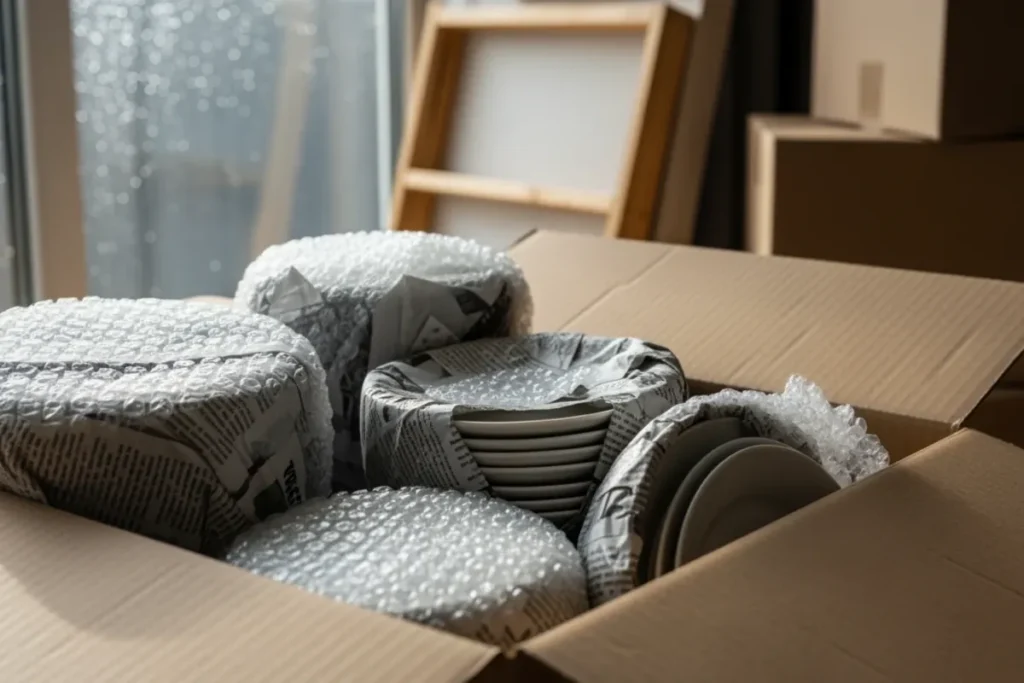
Packing fragile items is where a move starts to feel real. Clothes can survive a little chaos. Books usually can too. But one badly packed box of dishes, glassware, or electronics can turn moving day into a mess fast.
The good news is that careful packing is less about buying fancy supplies and more about using a few solid habits. If you know how to build a box properly, cushion the right spots, and avoid the usual mistakes, most fragile items travel just fine.
This matters even more during a busy relocation. When you are juggling keys, elevators, paperwork, and a hundred tiny decisions, you want your packing to be the part you do not have to worry about. If you are moving in Vancouver, where rain and damp conditions can sneak into the plan, good packing also protects items from moisture and not just impact.
Start by deciding what is actually worth packing
Before you wrap a single plate, sort your fragile items into three groups: must move, maybe move, and do not move.
That sounds obvious, but people waste a lot of time packing chipped dishes, old decor, duplicate vases, or electronics they have not used in years. Fragile items take the most time to protect, so they are the last things you want to pack “just in case.”
This is a good moment to be honest with yourself. If a glass side table is already unstable, or the old coffee maker leaks, moving it may cost more in time and stress than replacing it later. The same goes for random cords, mystery kitchen gadgets, and half-broken frames in the back of a closet. Some people handle this with a donation run. Others book junk removal and move on. Either way, less stuff means safer packing.
Fragile items usually fall into a few buckets:
- Kitchenware like plates, bowls, glasses, mugs, and serving dishes
- Decor such as mirrors, lamps, candles, and framed art
- Electronics including TVs, monitors, speakers, and small appliances
- Specialty items like collectibles, instruments, stone tops, or antiques
Once you know what is moving, group similar items together. Pack all stemware with stemware, all framed art together, all small electronics in one zone. It makes packing more consistent, and unpacking is much less annoying later.
Use the right packing materials, not whatever is lying around
I understand the temptation to grab grocery boxes and stuff everything with old flyers. Sometimes that works for sturdy items. For fragile items, it usually backfires.
You do not need a warehouse of supplies, but you do need a few basics that do the job well:
- Small to medium boxes. Large boxes get too heavy fast, especially with dishes or glass.
- Packing paper or plain newsprint. It cushions well and does not leave ink marks.
- Bubble wrap for extra protection around delicate surfaces and corners.
- Packing tape that actually sticks. Weak tape is one of the most common causes of box failure.
- Dividers or cell kits for glassware, bottles, and smaller breakables.
- Foam sheets or cardboard corner protectors for mirrors, frames, and screens.
- Markers and labels so fragile boxes do not disappear into the general pile.
A quick note on materials people often improvise with: towels, sweaters, socks, and linens can help as padding, especially around unbreakable surfaces or inside larger boxes. They are fine as backup. I would not rely on them alone for stemware, ceramics, or electronics. Soft does not always mean protective. A towel can cushion a bump, but it does not keep a mug handle from taking a direct hit.
If you still have original packaging for a TV, monitor, or small appliance, keep it. Those boxes were designed for the item’s shape and weak points. They are usually better than anything you can re-create.
Follow a few packing rules every time
Most breakage comes from the same small mistakes. The box is too big. The bottom is weak. There is empty space inside. Or the item was wrapped, but not really supported.
The basic rule is simple: each fragile item needs protection around itself, and the box needs protection around the item.
Start by reinforcing the bottom of every box with tape. Then add a cushioned layer on the bottom, usually crumpled packing paper or a thin layer of bubble wrap. Wrap each item on its own. Do not let glass touch glass or ceramic touch ceramic. That direct contact is where chips and cracks start.
After items go in, fill all empty spaces. This matters more than people think. If the contents can shift, they will. And when movers hit a curb, a ramp, or a tight hallway turn, that shifting becomes impact.
A few rules are worth memorizing:
- Use small boxes for heavy fragile items like dishes, books, and dense ceramics.
- Wrap items individually, even if they seem sturdy.
- Fill empty space on all sides, not just the top.
- Keep heavier pieces on the bottom and lighter ones above.
- Label boxes clearly, but pack them as if nobody will read the label.
That last one sounds cynical, but it is practical. Marking “Fragile” helps. So does writing “This Side Up.” Still, boxes get stacked, shifted, and handled by tired humans. Good packing should survive normal handling, not depend on perfect handling.
How to pack the fragile items people break most often
Plates, bowls, and serving dishes
Plates should be wrapped one at a time and packed vertically, like records on a shelf, not stacked flat. Vertical packing spreads pressure more evenly and lowers the chance of one plate cracking under the weight of another.
Bowls can be nested if each one has padding between it and the next. Serving platters and larger dishes need extra padding around edges, because edges crack first. Use a small box, keep it tight, and do not overfill.
If you have dish pack boxes, great. If not, standard small boxes work as long as the bottom is reinforced and you create a soft base and top.
Glasses, tumblers, and stemware
Glasses should be wrapped individually and placed upright. For delicate glasses, stuff a little packing paper inside first, then wrap the outside. That supports the shape without forcing pressure on it.
Stemware needs more care. The bowl and the stem should both be protected, and the stem should never carry the weight of another item. Divided boxes help a lot here. If you do not have dividers, use plenty of paper between pieces and make sure they cannot lean into each other.
A mistake I see often is putting all glassware into one oversized box because it “fits.” It fits until the box is lifted. Then it becomes too heavy, flexes at the bottom, and everything inside is suddenly at risk.
Mugs and ceramic pieces
Mugs are tricky because the handle is the weak spot. Wrap the whole mug, then add extra paper or bubble wrap around the handle area. Pack mugs upright, not on their sides, and do not wedge them so tightly that handles press into neighboring items.
For ceramics like vases, figurines, and decorative pieces, protect narrow parts first. A tall vase with a slim neck needs support around the neck and the base. If the item has a lid, remove and wrap it separately.
Mirrors, picture frames, and glass tabletops
Flat glass items need edge protection more than anything else. Wrap the surface in paper or foam, protect the corners, then sandwich the piece between two sheets of sturdy cardboard. After that, place it in a mirror box or a custom-fit carton if possible.
People sometimes tape a big X across mirror glass. That can help keep shards more contained if the glass breaks, but it does not stop breakage. The real protection comes from padding, corner support, and keeping the item upright.
For framed art, wrap the frame, protect the corners, and avoid stacking multiple frames face to face without padding between them. If the piece is valuable or sentimental, I would not improvise much. This is where specialty packing is worth it.
Lamps and lampshades
Remove bulbs, harp fittings, and any detachable parts. Wrap the base separately from the shade. Lampshades should not be crushed into boxes with other items. They are light, but they deform easily.
If the lamp base is ceramic or glass, treat it like any other breakable decor piece. Wrap it well, use a box that fits, and fill the gaps. For oddly shaped lamps, build protection around the shape instead of forcing the piece into a box that is too tight.
TVs, monitors, and electronics
Flat-screen TVs and monitors should travel upright, not laid flat, unless the manufacturer says otherwise. If you have the original box and foam inserts, use them. If not, wrap the screen in a soft, non-abrasive layer, then add corner protection and place it in a snug, well-padded box.
Take photos of cable setups before disconnecting everything. It saves time during unpacking, especially for home office gear or entertainment systems. Place cords, remotes, screws, and mounting hardware in labeled bags and keep them with the device they belong to.
Electronics and moisture are a bad mix, which matters in rainy weather. If you are moving during a wet Vancouver week, keep electronics covered during loading and unloading, and do not leave them sitting in an open truck while other items are being sorted.
Small appliances
Coffee machines, blenders, air fryers, and mixers need more prep than people expect. Empty water reservoirs, clean out crumbs or residue, and let everything dry fully before packing. Trapped moisture can lead to smells, mold, or damage during the move.
Remove glass components and pack them separately. Tape moving parts if needed, but avoid taping directly onto delicate finishes.
Pay extra attention to awkward or high-risk items
Some fragile items are not delicate because of the material. They are delicate because of the shape, weight, or complexity.
Glass-top tables are a good example. The glass should be removed from the base if possible, wrapped on its own, and never left attached during transport. The same idea applies to shelving units with glass inserts. A little disassembly makes a big difference. The same goes for bed frames, desks, and wall units where assembly and disassembly reduce strain on fragile parts.
Then there are items that really should not be treated like standard household boxes at all. Stone tops, aquariums, chandeliers, antiques, large sculptures, and musical instruments often need custom packing. A pool table is in its own category. If you are moving one, call a pool table mover. That job usually involves careful disassembly, slate protection, hardware management, and precise reassembly later. It is not a weekend experiment.
Pack for the trip itself, not just the shelf
A box can look perfect in your living room and still fail in transit.
Think about what happens on moving day. Boxes get carried downstairs, rolled over thresholds, loaded into a truck, stacked, and unloaded again. If you live in a condo or apartment, they may also sit in a lobby while elevator timing gets sorted out. Good packing accounts for that whole chain.
Keep your most fragile and high-value items together so they can be loaded thoughtfully. Do not bury a carefully packed mirror behind a pile of loose garage items. If something must stay upright, write that clearly on several sides of the box.
Weather matters too. In wet conditions, line the loading path if possible, keep boxes off the ground, and do not use boxes that already feel soft or slightly damp. Cardboard loses strength fast when it gets wet.
The mistakes that break things most often
You can do a lot right and still lose a few items because of one avoidable choice. These are the big ones:
- Overfilling a box until it is too heavy to carry safely
- Leaving empty space so contents shift during transport
- Using old or weak boxes for heavy breakables
- Wrapping the item but forgetting to cushion the box itself
- Mixing heavy items with delicate ones in the same carton
- Packing dirty or damp items, especially appliances and kitchenware
- Assuming labels will protect the contents
Haste is another one. Most damage happens in the last hour of packing, when people get tired and start tossing “just a few more things” into whatever box has room left.
When it makes sense to get professional help
There is no prize for packing every fragile item yourself. Sometimes it is smarter to hand off the hard parts.
If you are moving a full home, downsizing quickly, relocating an office, or dealing with time pressure, professional movers can take a lot off your plate. The same goes for high-value art, oversized mirrors, specialty furniture, or anything with glass and moving parts. A good moving company should be able to explain how they handle fragile packing, what materials they use, and whether unpacking is included or optional.
If you are comparing moving services in Vancouver, ask specific questions. Do they pack fragile kitchenware? Can they handle furniture delivery for a single delicate item? Do they offer unpacking, assembly, or disassembly for larger pieces? What happens if an item needs special crating or extra protection? Clear answers matter more than vague promises.
And if there are items you already know you do not want to keep, deal with that before moving day. Packing things you plan to throw away later is a frustrating way to spend money and energy.
A calmer move starts with slower packing
Fragile items do not need magic. They need time, decent materials, and a little patience.
If I had to boil it down, I would say this: use smaller boxes, wrap items one by one, fill every gap, and do not rush the last few boxes. That alone prevents a surprising amount of damage.
Moving is tiring, and packing is rarely anyone’s favorite part. Still, when you open a box at the new place and every glass, plate, frame, and screen is intact, the effort feels worth it. That is the kind of stress-free move people actually want.