Unpacking has a bad reputation, and honestly, some of that is earned. After the rush of moving day, you are tired, your routines are gone, and half your belongings seem to have disappeared into boxes marked with vague labels like “misc.” That part feels chaotic because it usually is.
But here’s the good news: unpacking gets much easier when you stop treating it like a separate job that starts after the truck leaves. Good unpacking begins while you are still packing. A little planning changes everything. You spend less time opening the wrong boxes, less time shifting items from one cupboard to another, and less time wondering why the scissors are in the bathroom.
If you are preparing for a home move, condo move, apartment move, or even a small office relocation in Vancouver, the same idea holds up. Pack for the new space, not the old one. That sounds obvious. In practice, people forget it all the time.
The biggest unpacking mistake happens before moving day
Most people pack according to where things live now. That feels logical in the moment, but it creates problems later.
Maybe your old home had a wide hallway closet and your new place has a narrow linen cabinet. Maybe your office used to be on the main floor and now it will be in the basement. Maybe your new kitchen has fewer upper cabinets but more drawers. If your boxes are packed and labeled according to your old setup, unpacking becomes a guessing game.
A better approach is to think ahead. Before you start serious packing, walk through both homes. If you can access the new place in advance, spend time there with your phone and a notebook. Open cupboards. Measure shelves if needed. Look inside bathroom vanities, linen closets, pantry shelves, entry storage, under-stairs areas, and walk-in closets.
Take photos of those spaces.
That one step helps more than people expect. When you are back in your current home packing boxes, those photos tell you what kind of storage you are actually packing for. You can see whether the new kitchen has deep drawers or shallow cabinets. You can tell whether the coat closet will fit your vacuum. You stop packing on autopilot.
I think this matters most when a move involves downsizing, but it also matters in bigger homes. More space does not automatically mean better storage. Sometimes a newer place has cleaner lines and less practical room for real-life stuff.
Label boxes for the destination, not just the room
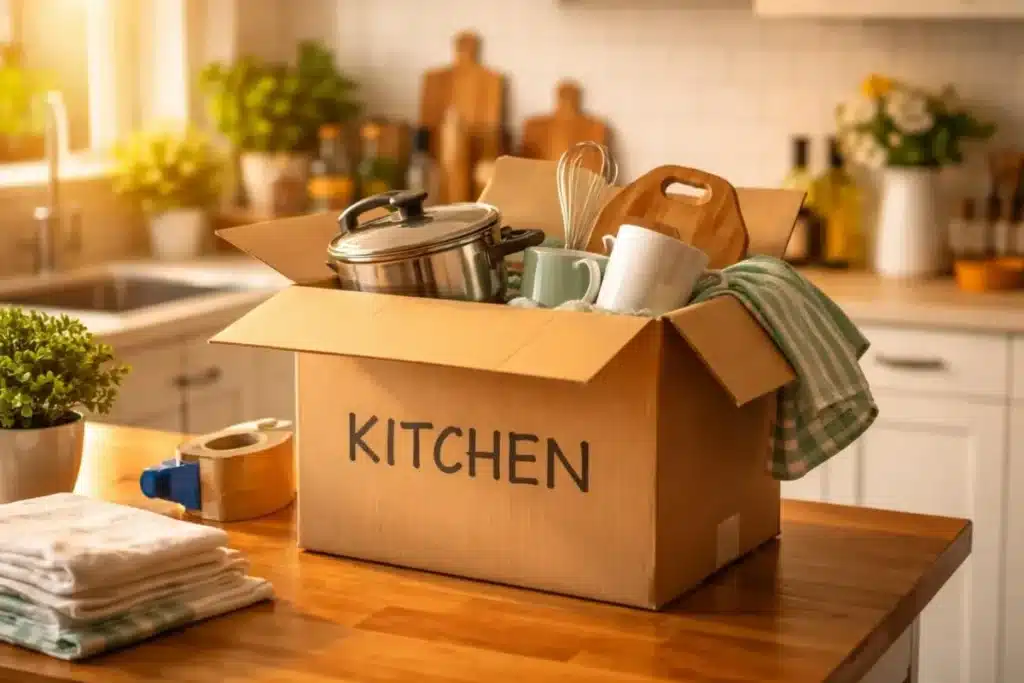
Room-only labels are better than nothing, but they are often too broad to be useful. “Kitchen” does not tell you whether the box belongs in the pantry, near the stove, under the sink, or on the top shelf no one can reach without a stool.
The fix is simple: get more specific.
Instead of labeling a box “Kitchen,” try something like:
-
Kitchen, upper cabinet right of stove, spices and oils
-
Kitchen, drawer beside dishwasher, food containers
-
Primary bathroom, under-sink cabinet, daily toiletries
-
Office, basement north wall, printer and cables
That may sound fussy. It is not. It is efficient.
Location-oriented labels save time for everyone involved in the relocation, whether you are handling the move yourself, working with friends, or hiring movers. Boxes land in more useful places right away. You do not need to drag them across the house later. You also make it easier to prioritize what gets opened first.
This is especially helpful when the new layout changes your habits. If the office is moving downstairs, label it for the basement office. If the cleaning supplies will now live in a laundry closet instead of the kitchen, say that on the box. Pack with the next version of your home in mind.
A simple trick that works well is to create a rough map before packing starts. Nothing fancy. Just note where daily-use items will probably live in the new place. You can revise once you arrive, but even a rough plan gives your packing some structure.
Notice where you are losing storage, and where you are gaining it
Every move changes storage, even if square footage stays about the same.
This is where people get tripped up. They assume their belongings will fit the same way because the new home looks similar. Then unpacking turns into a round of compromise. The old basket system no longer fits. The pantry shelves are shorter. The bathroom drawers are deeper but fewer.
When you walk through the new home, pay attention to these shifts. Ask practical questions:
Will this closet hold bulky winter coats, or just light jackets?
Do the kitchen drawers work better for cookware than the cabinets?
Is there space for extra linens, or do you need to pare down before moving?
Will the entryway handle shoes, bags, and sports gear without becoming a pile?
Those answers should affect how you pack. If you know you are short on storage in one area, do not pack and label as if nothing has changed. Group items more tightly. Edit down what you do not need. Set aside duplicates for donation or junk removal before moving day. That saves effort twice, once during packing and again during unpacking.
This is one of those dull, practical tasks that pays off fast. Nobody misses the box of random plastic containers they decided not to move.
Unpack by function first, not by perfection
When you arrive, the temptation is to “finish” one room completely. Sometimes that works. Often it does not.
A smoother approach is to unpack by function. In other words, set up the parts of the home you need to live normally right away, even if the styling comes later.
Start with the bathroom basics, the bed, medications, chargers, and enough clothing for a couple of days. Then turn to the kitchen, because once the kitchen works, the whole move feels less unsettled. You can make coffee, wash dishes, prepare something simple, and stop living like a traveller in your own house.
Perfection can wait. Working systems matter more.
I think this is where people are hardest on themselves. They want the new place to look done immediately. It usually will not. That is fine. A functional home on day one is better than a visually perfect home on day seven that still makes daily tasks annoying.
In the kitchen, use appliances to create zones
The kitchen is where unpacking gets either smart or frustrating. It is also the room most people end up reorganizing later because they set it up too quickly.
The easiest way to avoid that is to anchor your decisions around the large fixed appliances: the fridge, the stove, and the dishwasher. Those three pieces tell you where the main work zones should go.
The fridge suggests the food-storage and meal-prep flow. The stove suggests the cooking zone. The dishwasher suggests where everyday dishes, glasses, and cutlery will be easiest to put away.
Once you think in zones, cupboards and drawers make more sense. Spices and cooking utensils belong near the stove. Plates and glasses usually belong near the dishwasher so clean-up is easier. Food containers often make sense near prep space or near the fridge, depending on how you use leftovers. Cutting boards and mixing bowls should live close to the area where you actually chop and assemble food, not where they happened to fit in the old place.
This is also a good time to think about your dominant hand. If you are right-handed, reaching to the right for your most-used utensil crock or cooking tools may feel smoother. If you are left-handed, the reverse may be more natural. Tiny ergonomic choices sound minor until you repeat them every day.
You are not organizing for a photo. You are organizing for Tuesday night dinner when you are tired.
Five kitchen choices that make unpacking easier and cooking smoother
Here are the decisions worth making carefully the first time.
-
Put countertop appliances where the outlets already support daily use.
Before you unpack the toaster, kettle, coffee machine, or microwave accessories, check where the outlets are. The best spot is not always the prettiest one. It is the one that lets you use the appliance without trailing cords across prep space. If you make coffee every morning, that setup should feel easy, not improvised. -
Give the best shelves to the things you use most.
People sometimes keep the previous owner’s logic without realizing it. Maybe the mugs were above the sink when you toured the home, or the plates seem like they “should” go in the cabinet near the window. Ignore that. Put your everyday dishes on the most accessible shelves, even if that means changing the expected arrangement. -
Keep spices and utensils close to the stove.
This one sounds obvious, yet it gets missed constantly. If spices are across the kitchen and the spatulas are in a crowded drawer near the fridge, cooking becomes a string of extra steps. The stove area should hold the tools and ingredients you reach for while food is actually in the pan. -
Store delicate glassware in a safer orientation.
Wine glasses are often packed awkwardly and then unpacked in stacks that do not really work. A better method is to store them upright in layers, with proper padding or shelf protection if needed, instead of stacking them horizontally. The same common-sense approach applies to bowls and other breakables. Stable, separated, and easy to lift beats clever every time. -
Keep prep zones clear of traffic and drawer conflicts.
One of the most annoying kitchen layouts is the one where everything important is crammed into the same spot. If your cutting board lives over the drawer that holds cutlery, someone opening that drawer will interrupt meal prep. If the trash, knives, containers, and dish towels all compete for one narrow section of counter, the kitchen feels crowded fast. Spread the activity out where you can.
That last point is easy to underestimate. A kitchen can look organized and still function badly. Good unpacking is not about getting everything into a cabinet. It is about making normal tasks feel smooth.
Give yourself permission to test the setup
Even with a good plan, you may need small adjustments after a few days. That is normal. What you want to avoid is a full kitchen reset because the first setup ignored how you actually move through the room.
Use the first week as a test. Notice what feels awkward. Are you crossing the room too often to unload the dishwasher? Are you reaching over the toaster to get bread? Is the coffee area blocking breakfast prep? Fix the friction points early.
The point of strategic unpacking is not to get every drawer perfect on the first try. It is to get close enough that your systems work, then fine-tune with intention instead of frustration.
A simple unpacking order for the first 48 hours
If you want a clear plan, keep it short:
-
Open the essentials boxes first, toiletries, medications, chargers, basic clothes, bedding.
-
Make one bathroom fully usable.
-
Set up the beds.
-
Unpack the kitchen zones you need right away: kettle or coffee setup, mugs, plates, cutlery, one pan, one pot, dish soap, towels.
-
Place everyday food and fridge items.
-
Break down empty boxes as you go so the home starts feeling calmer.
That order works because it restores routine. People settle faster when they can sleep, shower, eat, and find what they need without hunting through ten boxes.
When it makes sense to get outside help
Some moves are manageable with a weekend and a decent plan. Others are not.
If your relocation includes a tight timeline, young kids, mobility concerns, a business move, large furniture, or specialty items, it may be worth using professional moving services for part or all of the job. That might mean help with packing, unpacking, furniture delivery, or assembly and disassembly. If you are combining a move with decluttering, junk removal can also make the process lighter. And if you have a specialty item like a slate table, hire an actual pool table mover instead of hoping general handling will be enough.
That is true in Vancouver as much as anywhere else. Parking constraints, elevator bookings, condo rules, and rainy moving days can turn a simple plan into a complicated one. A good moving company or experienced movers cannot make every move easy, but they can remove a lot of avoidable mess.
Still, even if professionals handle the lifting, your labeling and planning matter. Clear instructions help everyone place boxes correctly. The better your system, the better the outcome.
The goal is less redoing, not more speed for its own sake
People often talk about unpacking like the main goal is to finish fast. I do not think that is quite right. Fast is nice, sure. But the real goal is to avoid doing the same work twice.
When you pack with the new home in mind, label with real destinations, and set up the kitchen around how you actually cook and clean, you cut out a huge amount of second-guessing. You reduce stress on moving day. You reduce the need to reorganize a week later. And you make the new place feel usable much sooner.
That is what most people want after a move. Not perfection. Just a home that works.